Last.fm

Nov 2007 - Nov 2009

I worked as Lead Interaction Designer for Last.fm between November 2007 and November 2009. I got to work on a wide range of projects, from the website, to desktop software, to mobile phone apps, and integration with hardware partners.

I got to listen to nearly all the key voices in the day-to-day running of things – from users, to advertising partners, to business development and so on, and the work spanned from service design and strategy, to defining use cases and user testing, to implementation details such as UI and icon design.

Website work

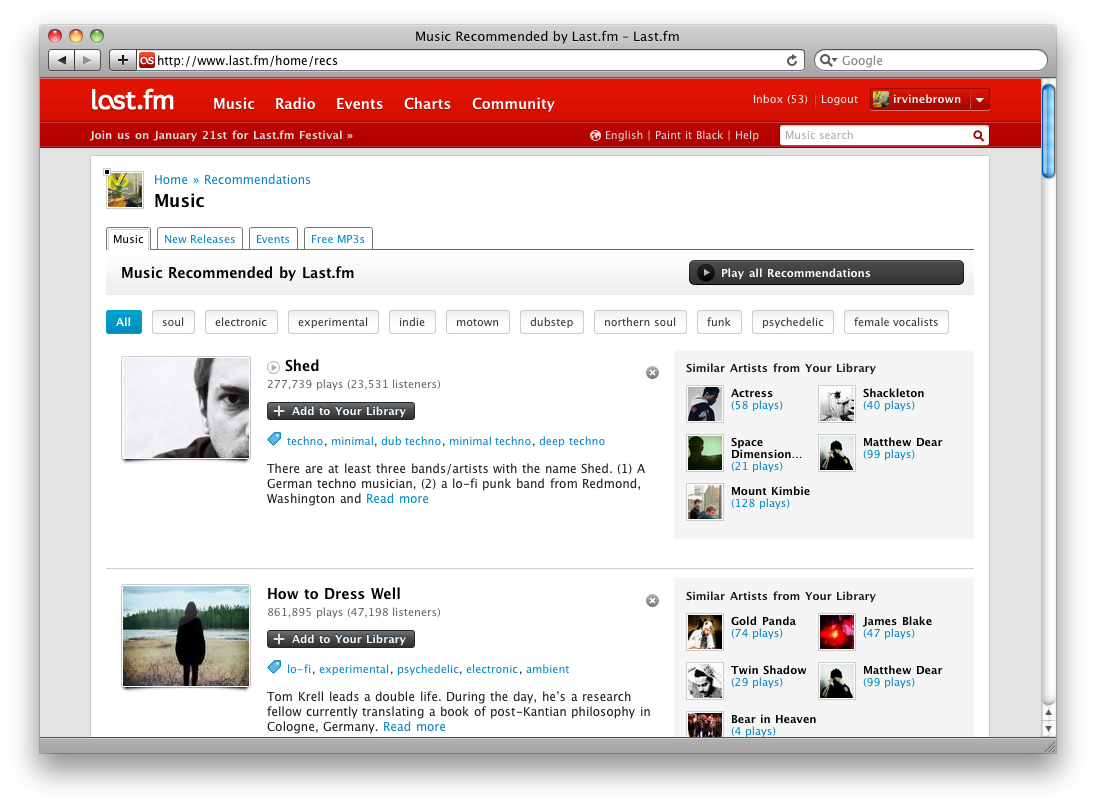
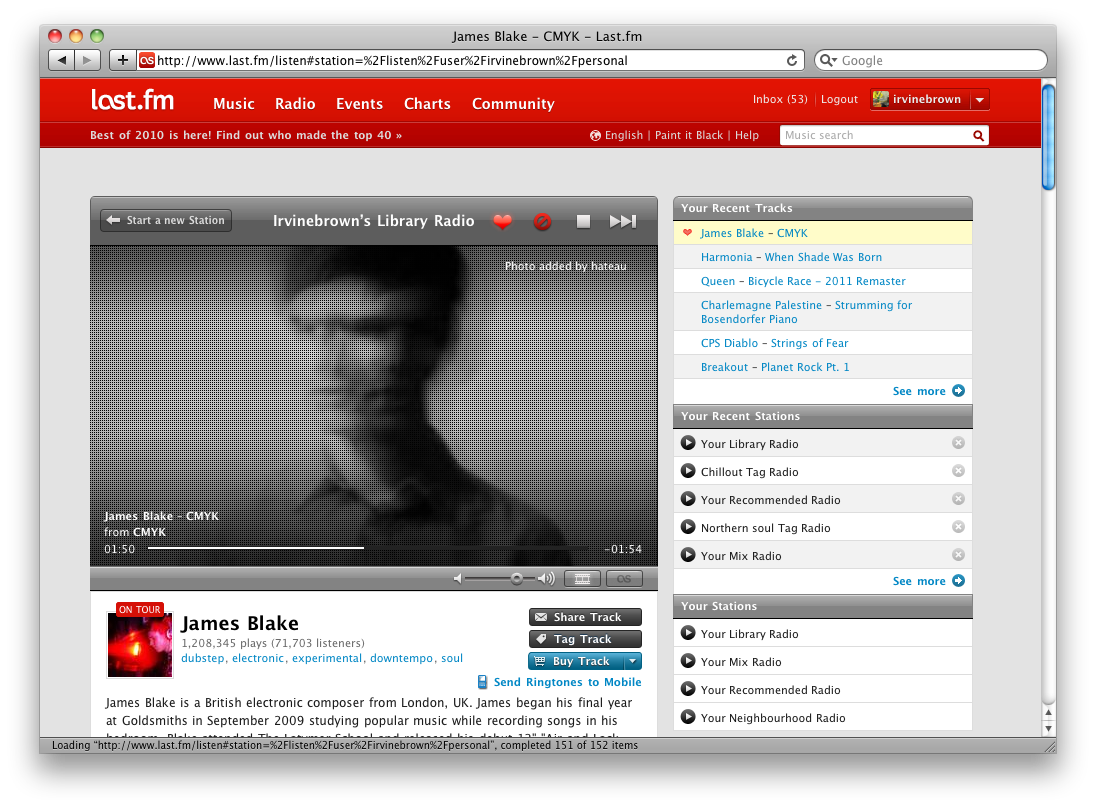
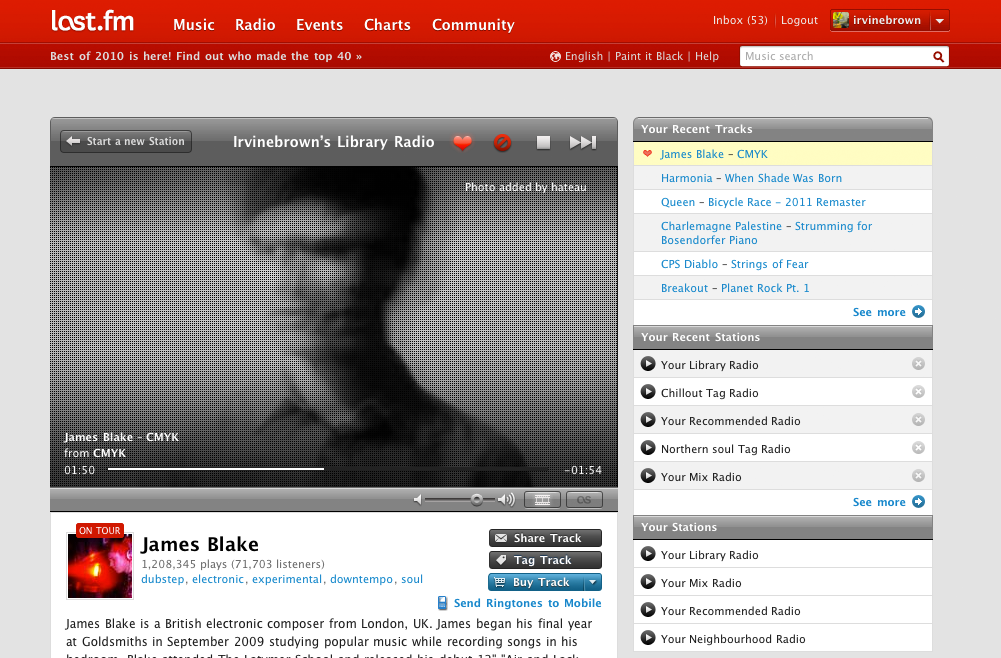
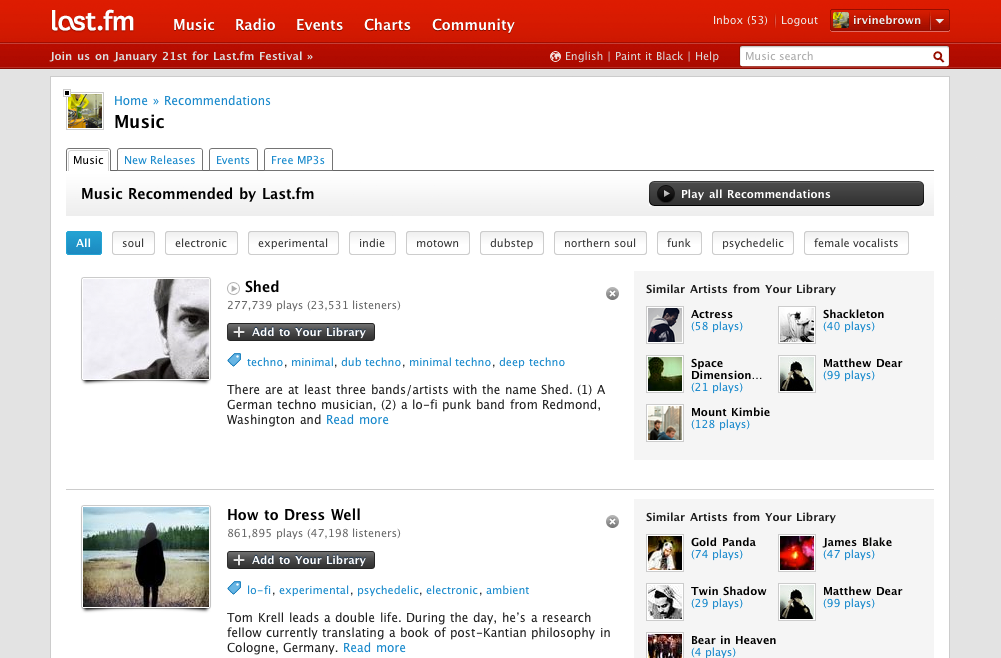
Over 2 years, I worked on many nooks and crannies of the website, which covers nearly every facet of music experience we can think of – acquiring music; owning it; describing it; listening to it; sharing it; identifying with it – and so on. It’s a massive, sprawling beast of a thing, with over 40 million users, so the work mainly involved iterative improvements and ad-driven changes, together with the occasional big redesign.

Informatics and observation

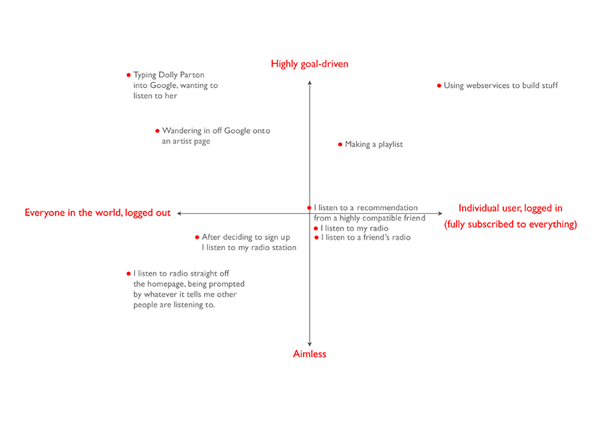
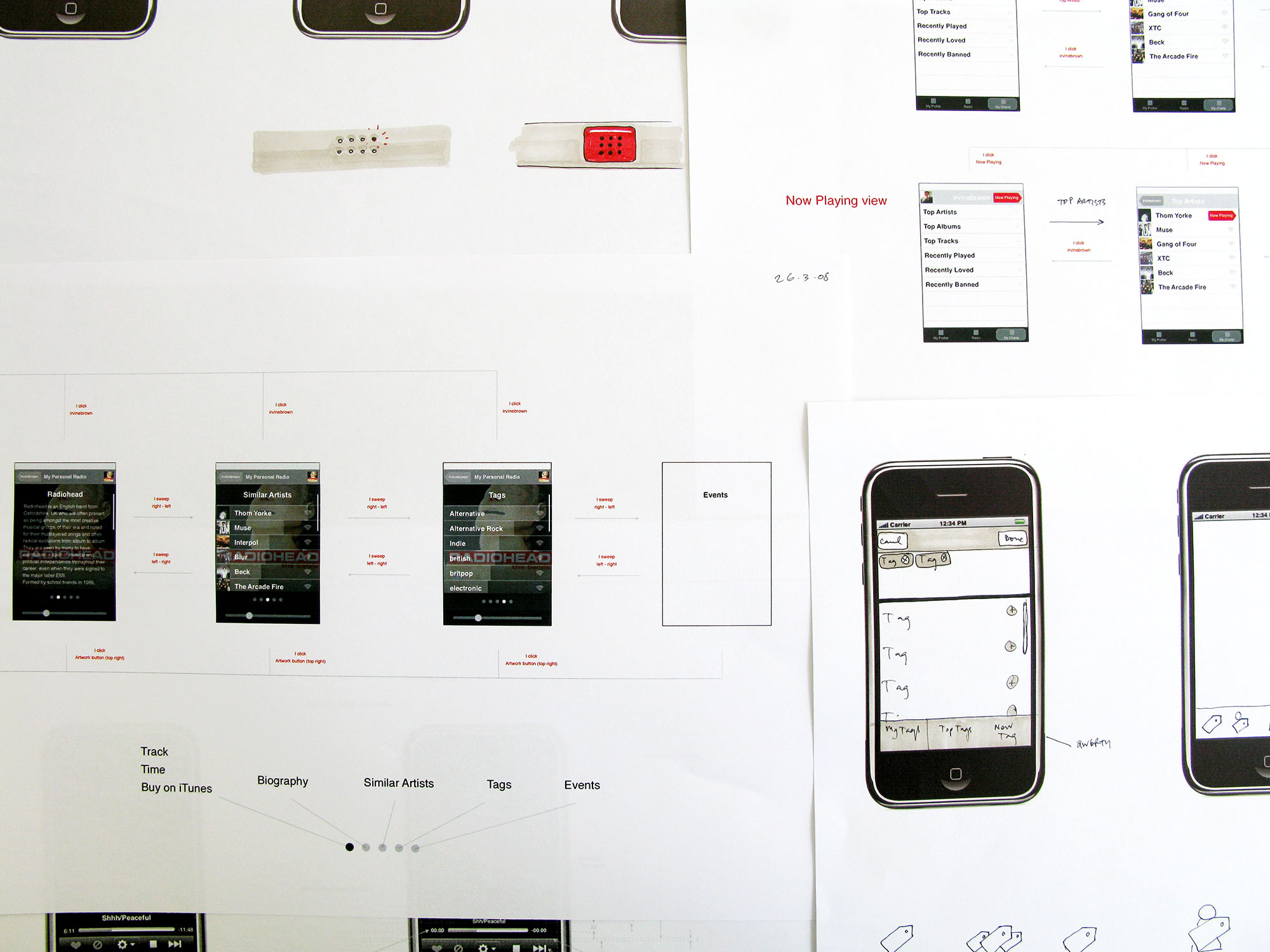
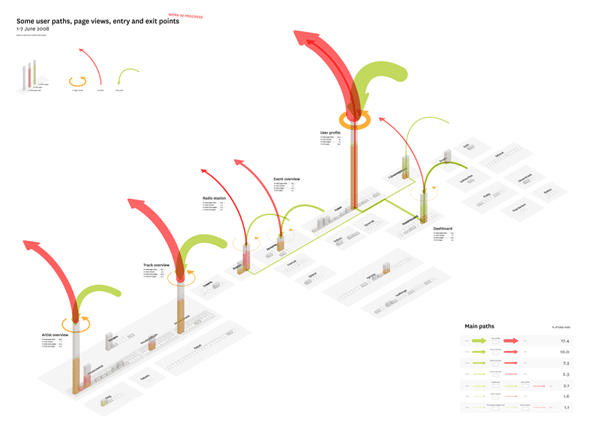
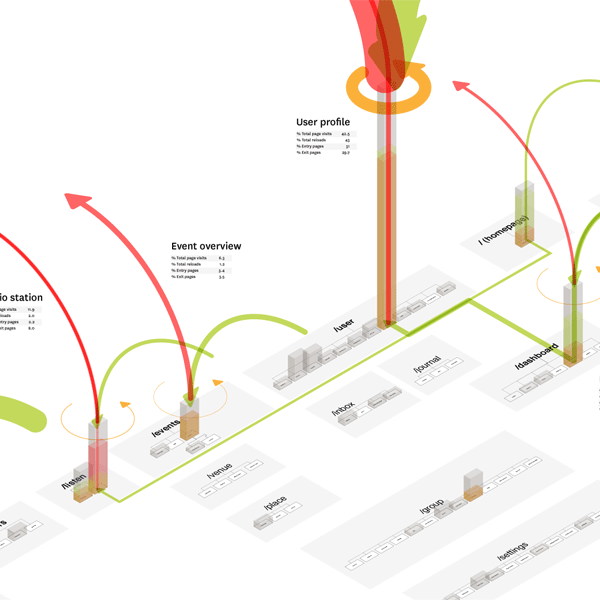
A lot of design decisions involved observing users’ behaviour. Last.fm has an amazing array of talented engineers, who helped tease out information about interactions and paths people took around the site. I’d take this data and produce diagrams like these in order to help inform key bits of decision-making.

Strategy and service design

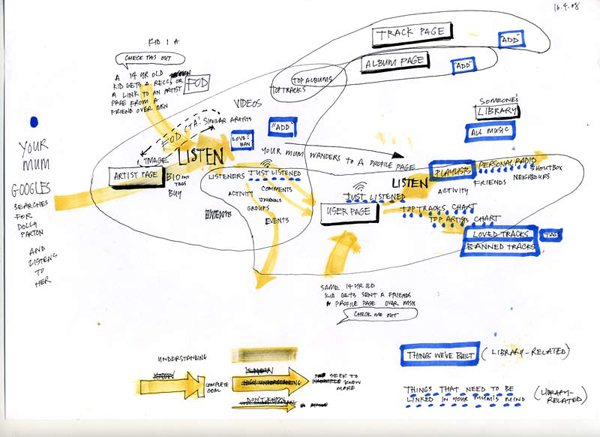
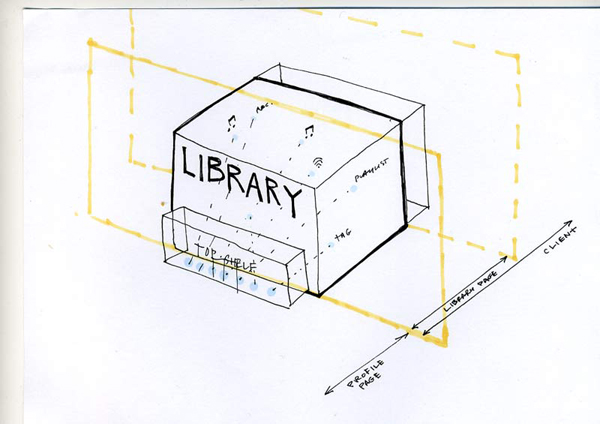
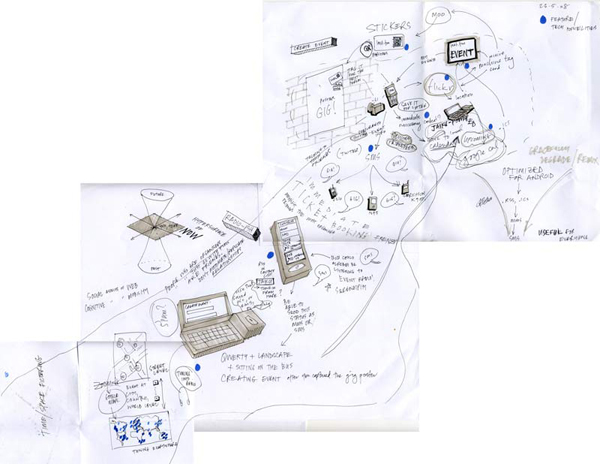
A lot of my work involved grouping trends and patterns of behaviour seen around the site, to help better define what got built and how to improve it. These took the form of anything from formal diagrams to rambling streams of consciousness drawn during the course of heated discussion, when notes and thoughts could translate into working prototypes within a matter of hours. This work tended to mean running between strategy people, advertising teams and developers, helping to turn sales pitches into prototypes and vice versa.
Guerrilla user testing

During my time there I set up Last.fm’s first attempts at guerilla user testing, organising impromptu chats in cafes to test raw prototypes out in a quick and dirty way. We mixed our findings with more formal user testing methods and feedback on discussion forums, meaning we got very rich responses to the things we built, and could iterate development directly with our users’ help. Working this way helped an engineering-driven company remember that all of our work was (or rather, should be) ultimately about improving user experience.

Last.fm on Xbox Live

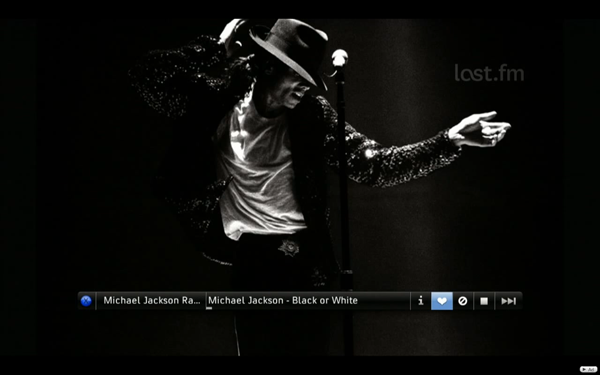
I also worked closely with Last.fm’s partners, such as Sonos, Logitech, Apple, Android, Motorola and so on, to help align Last.fm’s user experience on third-party hardware and software. One of the bigger jobs was with Microsoft, where we co-designed Last.fm for Xbox Live.

Production work: user interfaces, graphics, animation

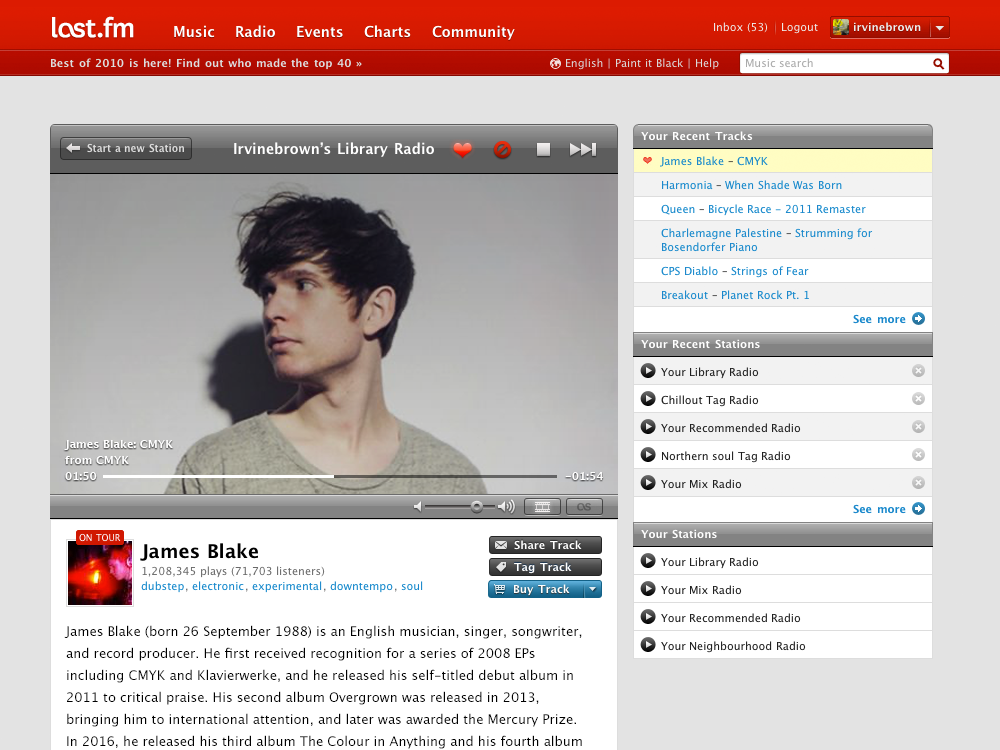
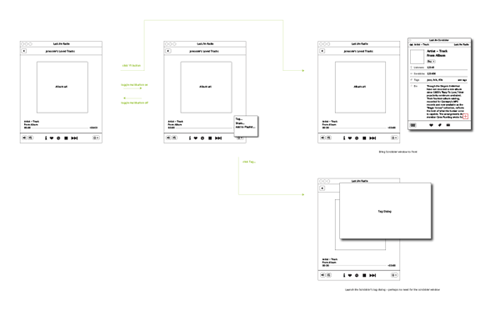
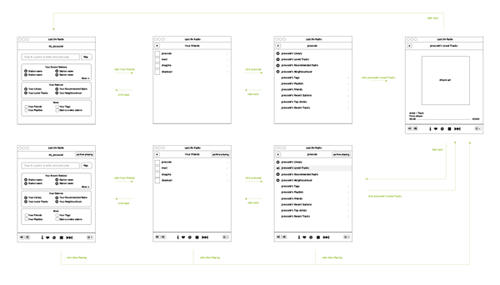
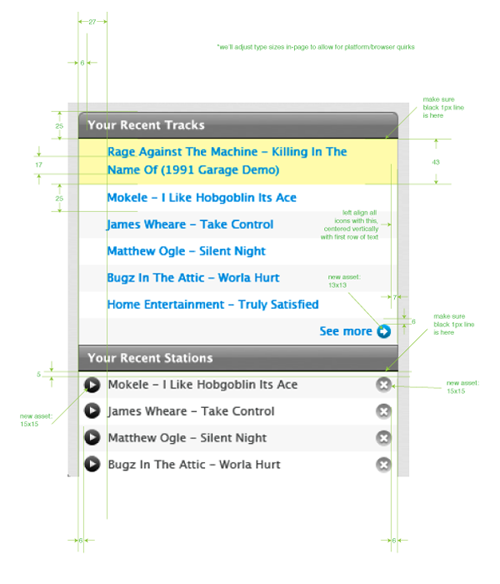
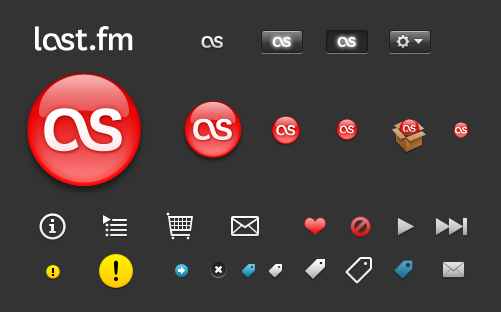
I worked on more detailed production jobs as well as strategy and service design, especially on stuff we produced in-house, like the Last.fm iPhone and Android apps, desktop software client and Radio page. In these situations I would look after everything from UI wireframes and flows down to icons, typography, layout, animations and so on.

Mobile: iPhone and Android apps

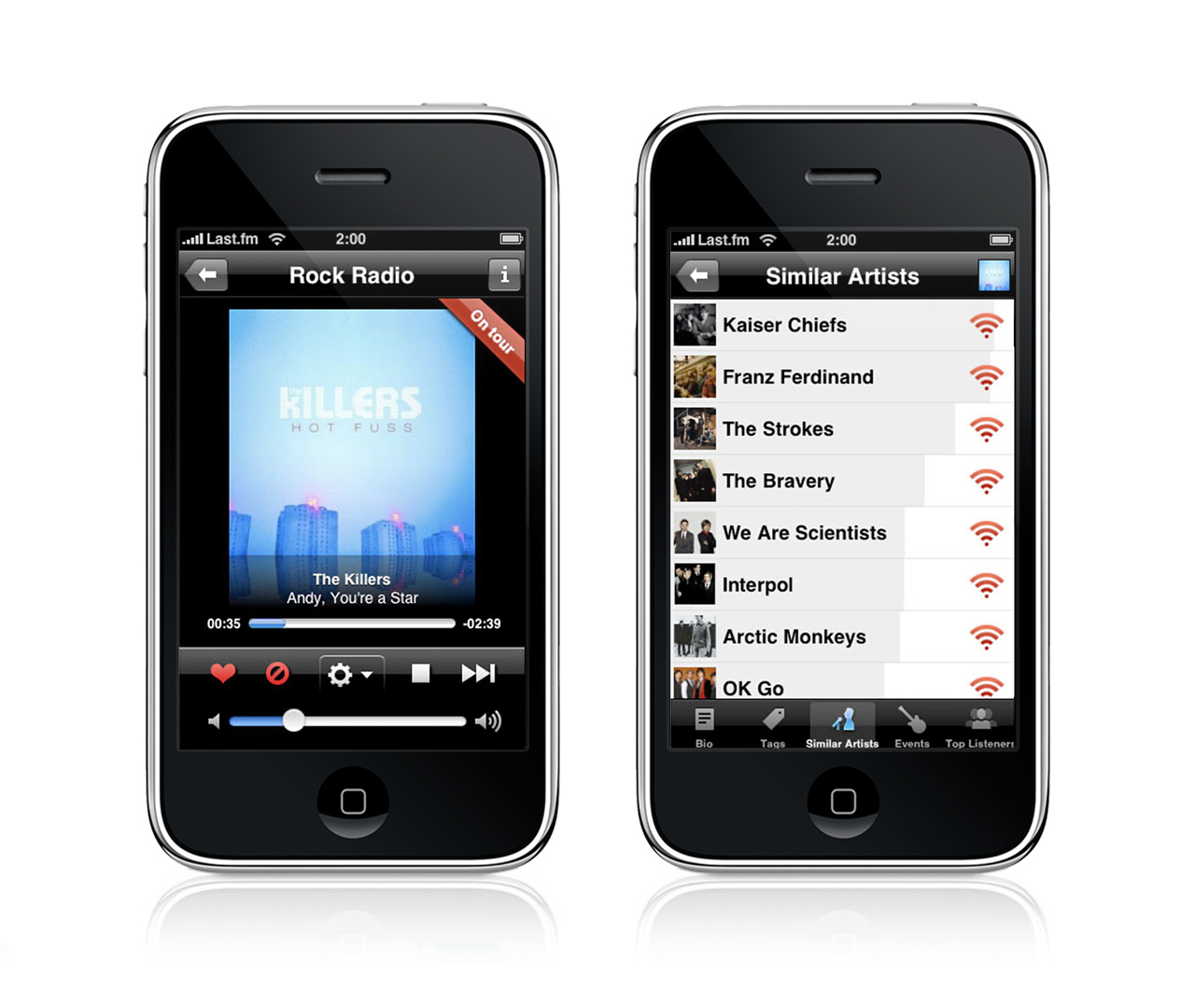
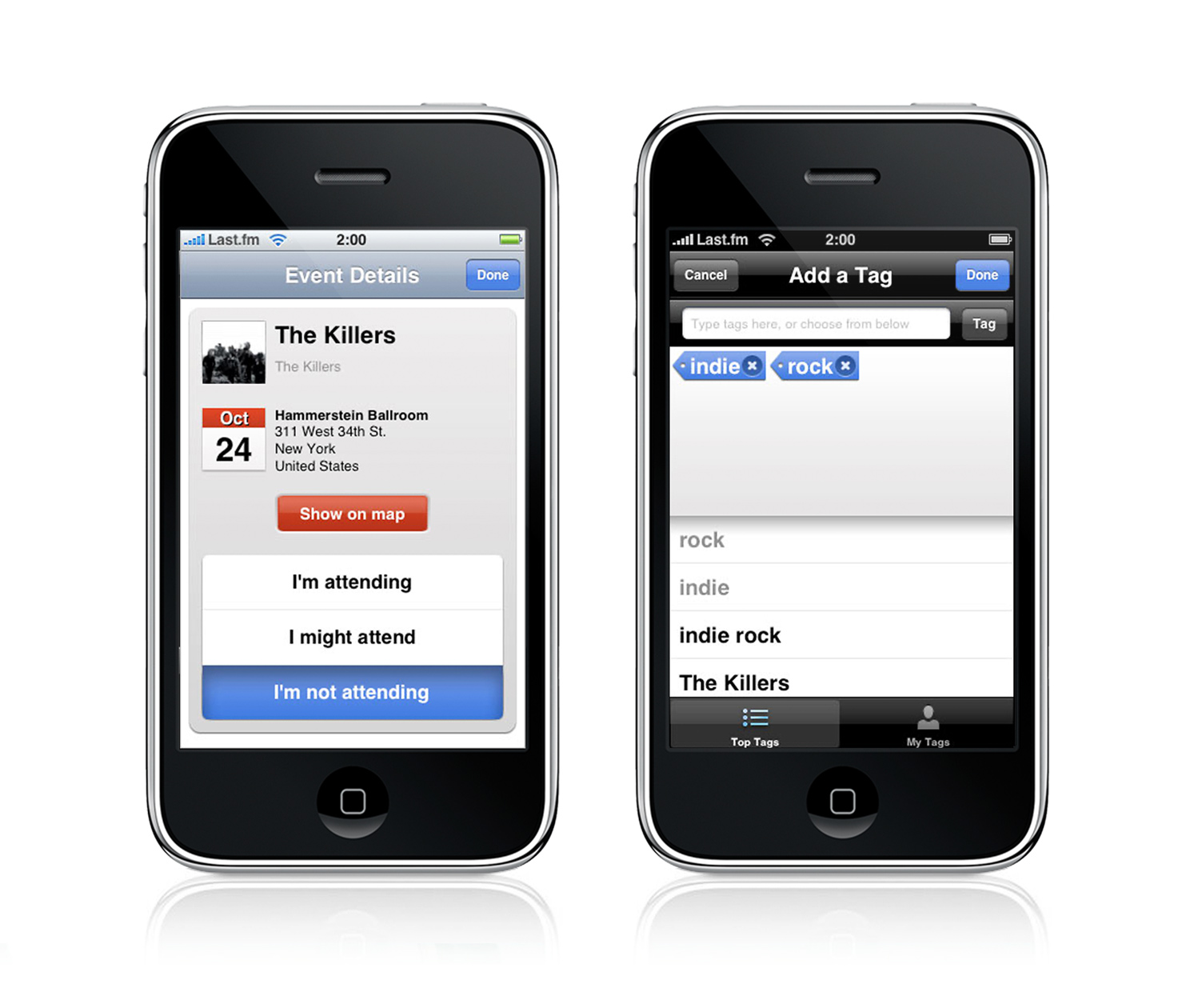
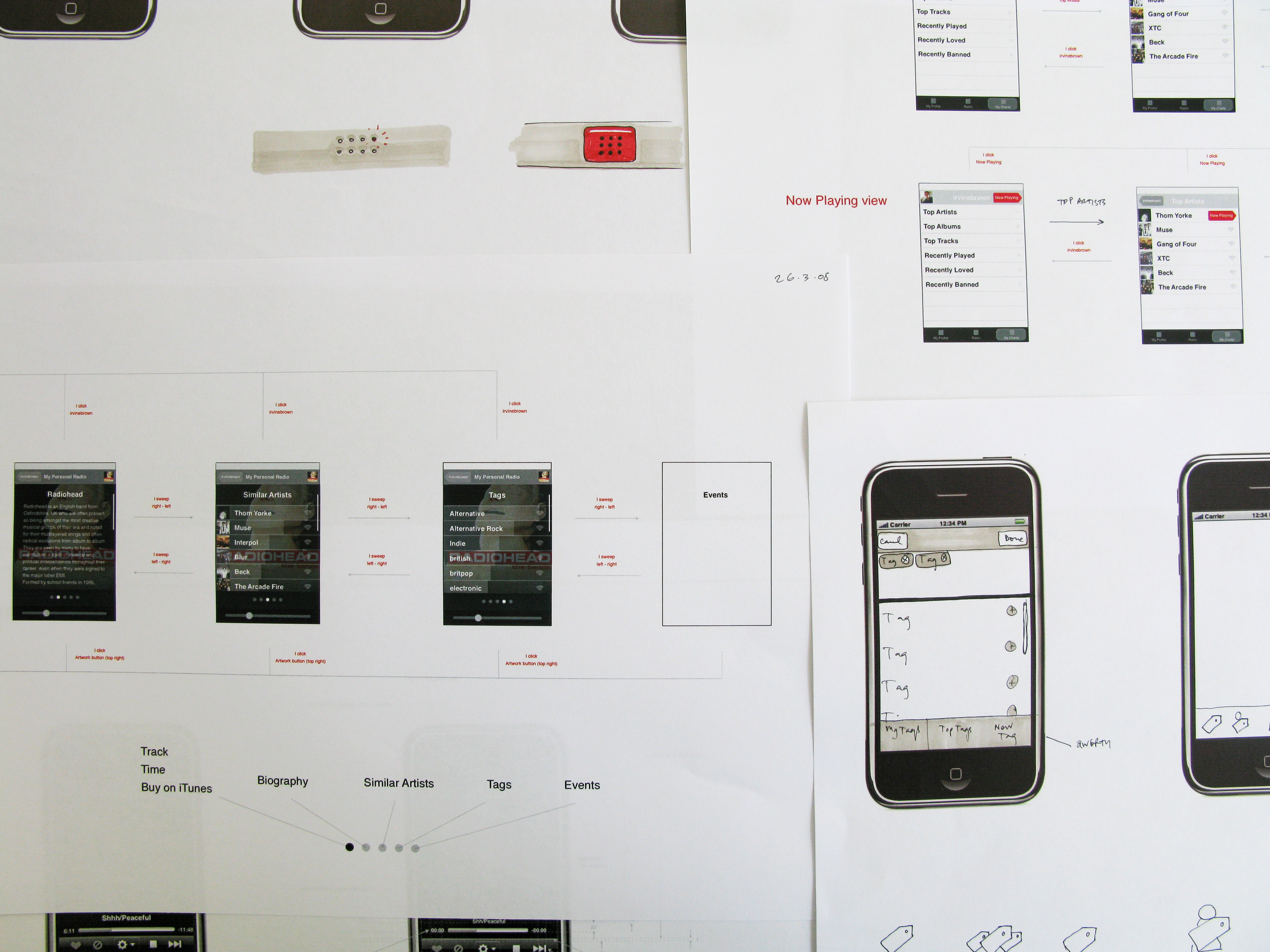
I designed the first versions of Last.fm’s apps for iPhone and Android, working with the splendid Last.fm software client team. We overlapped a lot, building prototypes, tweaking, testing and so on. This work tended to be more self-contained than work on the website, and had to align Last.fm’s features on each device’s UI conventions. I also acted as Last.fm’s consultant to companies like Nokia, Orange, Samsung and Vodafone, advising on their custom apps.

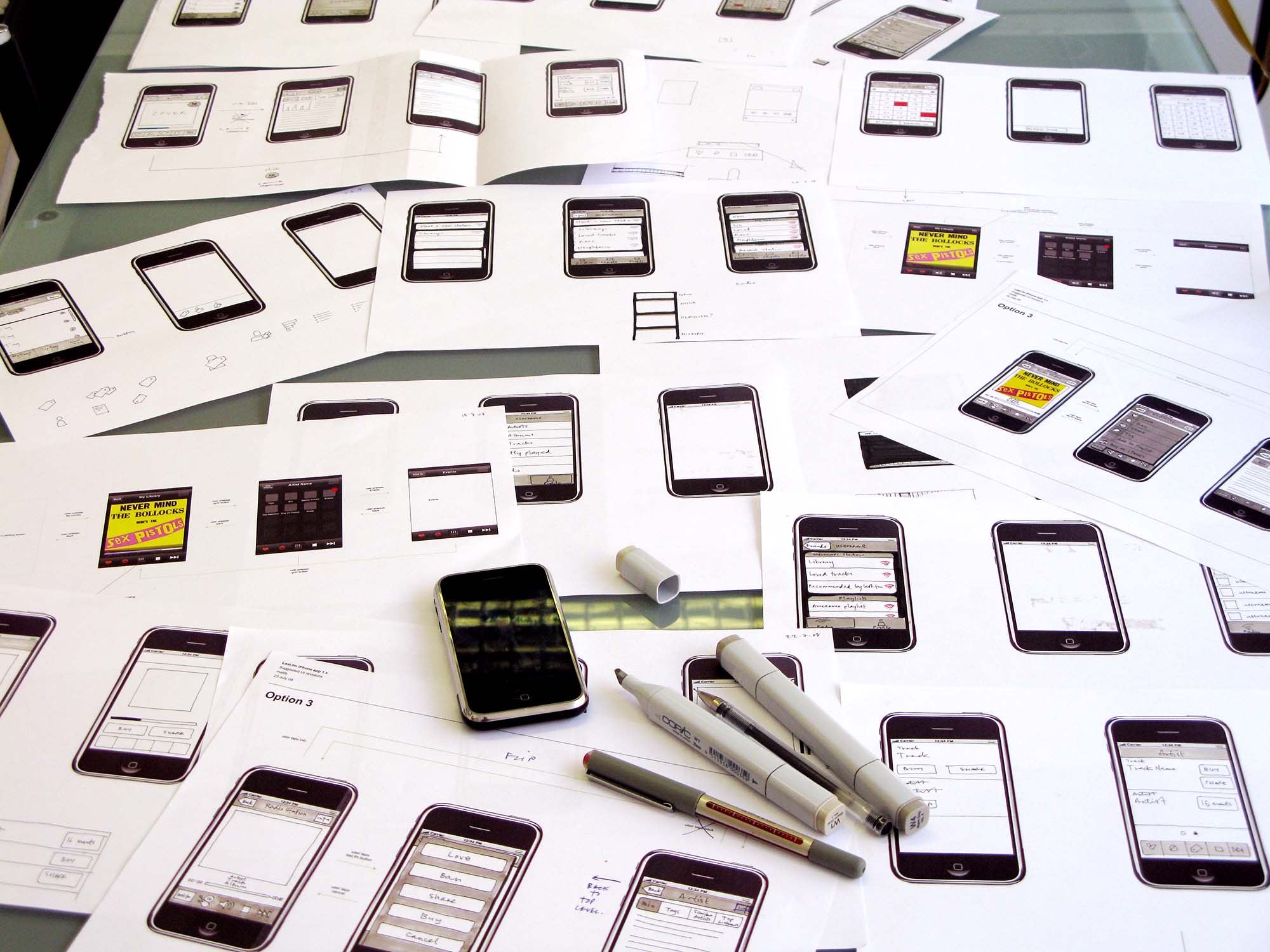
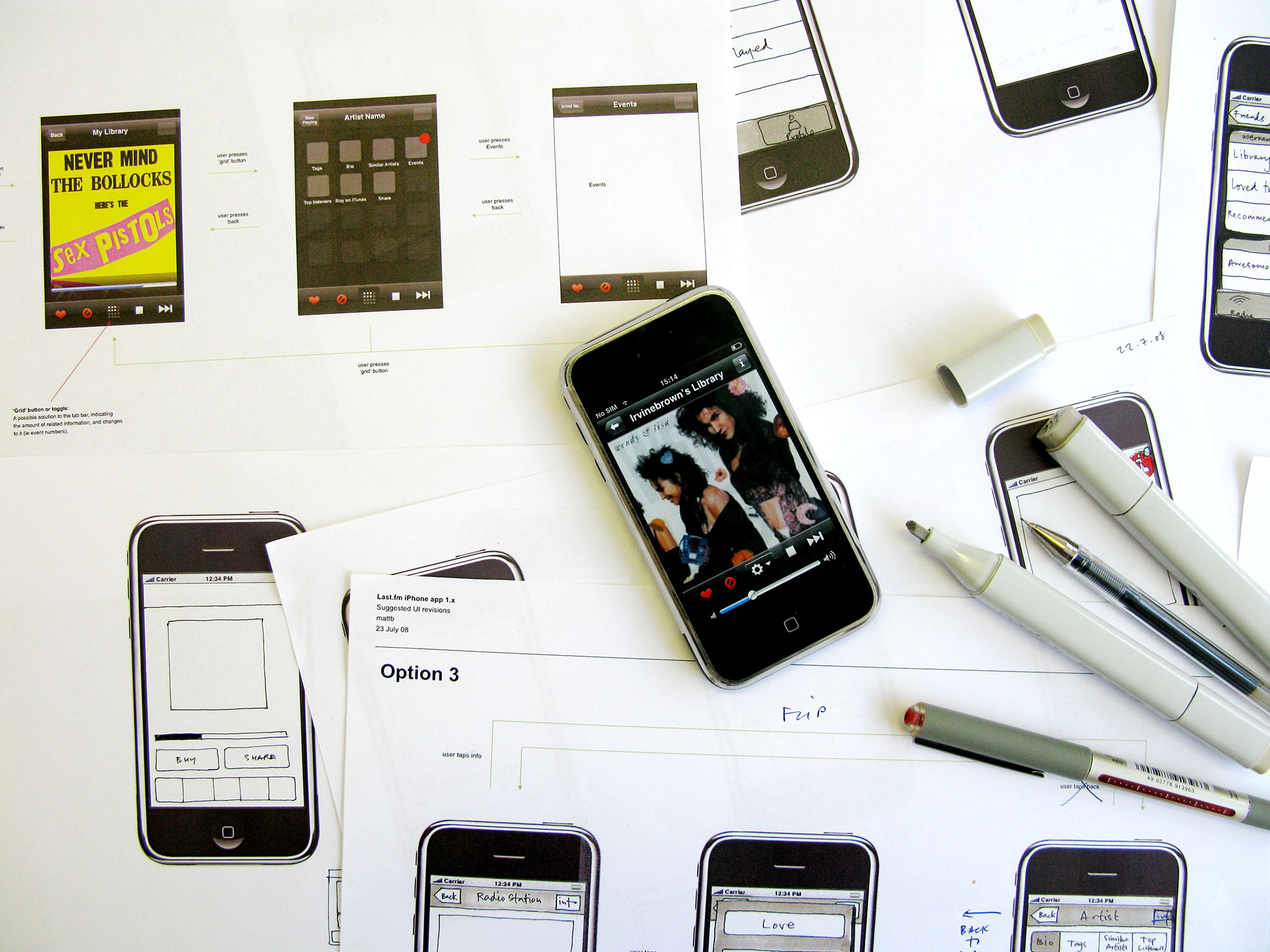
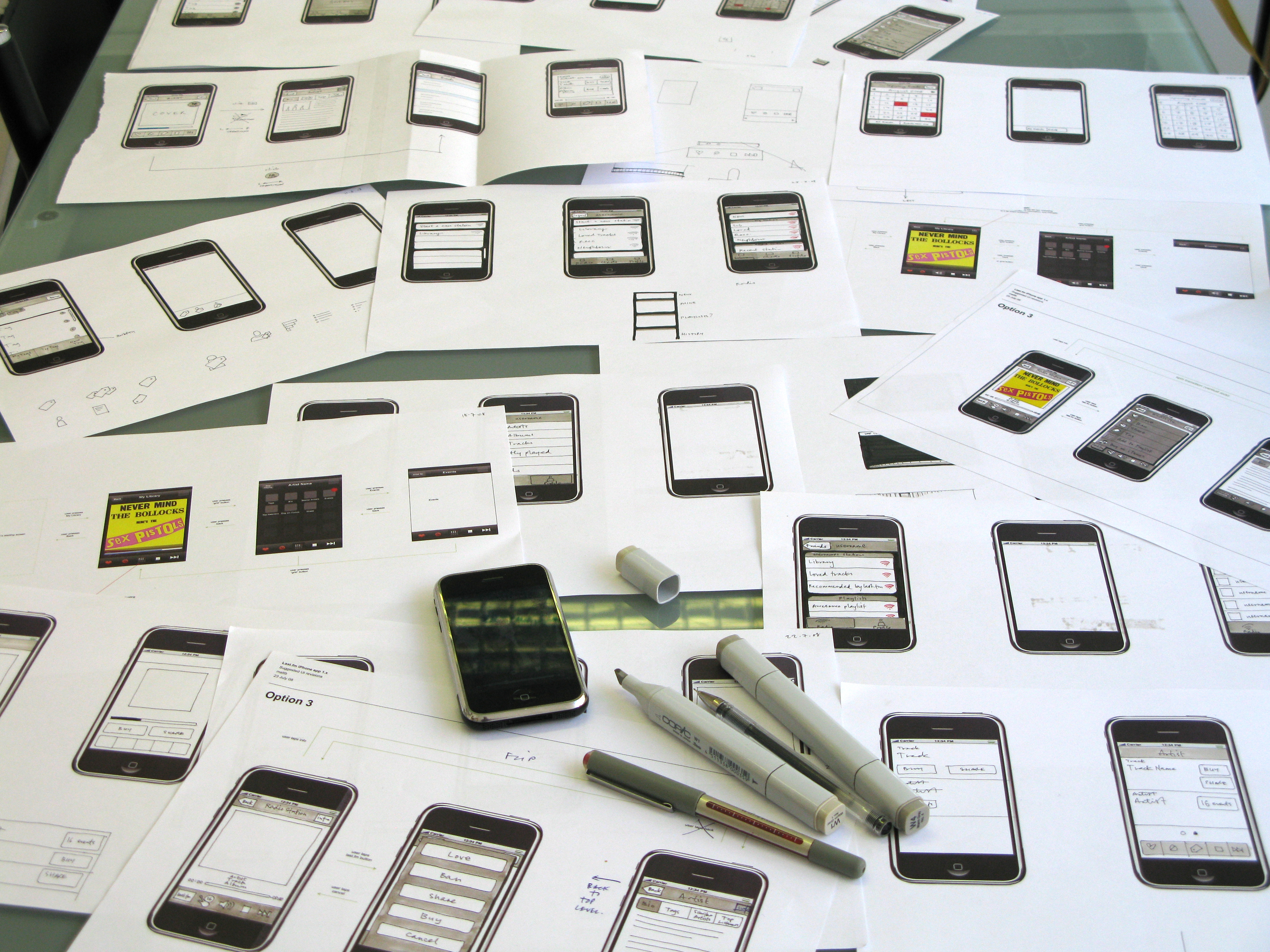
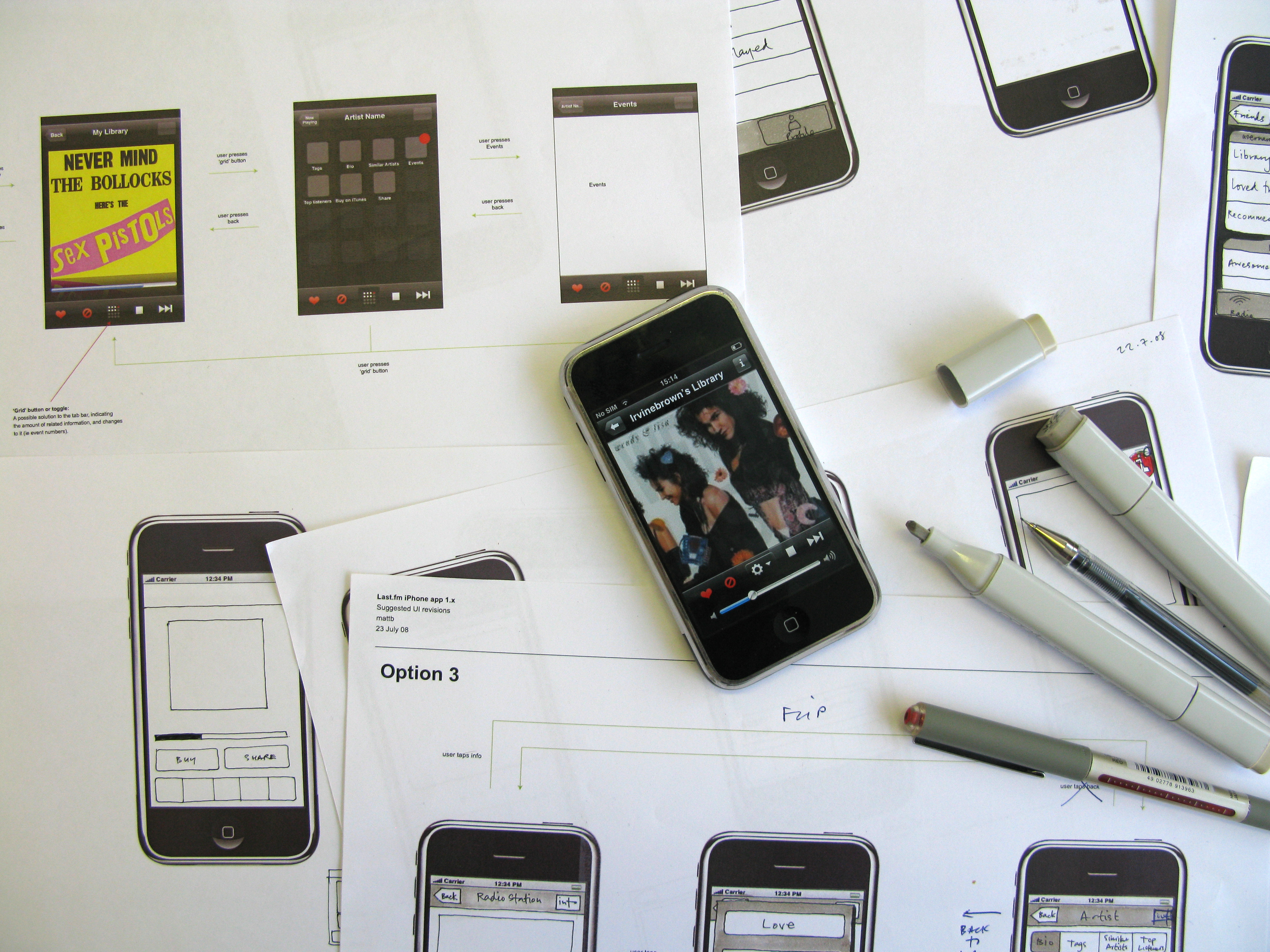
Designing the iPhone app, August 2008

Designing the iPhone app, August 2008

Designing the iPhone app, August 2008

The original Last.fm iPhone app was chosen to run on a series of national TV spots run in the UK during February and March 2009, (first run during the telly coverage of the BRIT awards, which was nice).

Overall, I was lucky enough to have worked with some amazing engineers, who straddled the gaps between business requirements, branding, advertising, design and technical challenges with aplomb. More often than not I got to jump from outlining services and interaction in broad strokes, to the trenches, supplying them with graphic assets to put together UI elements. The best work usually emerged when there were as few steps as possible between these points. Sketching in code as well as on paper was super productive, and winning arguments with prototypes was particularly rewarding.

← Back