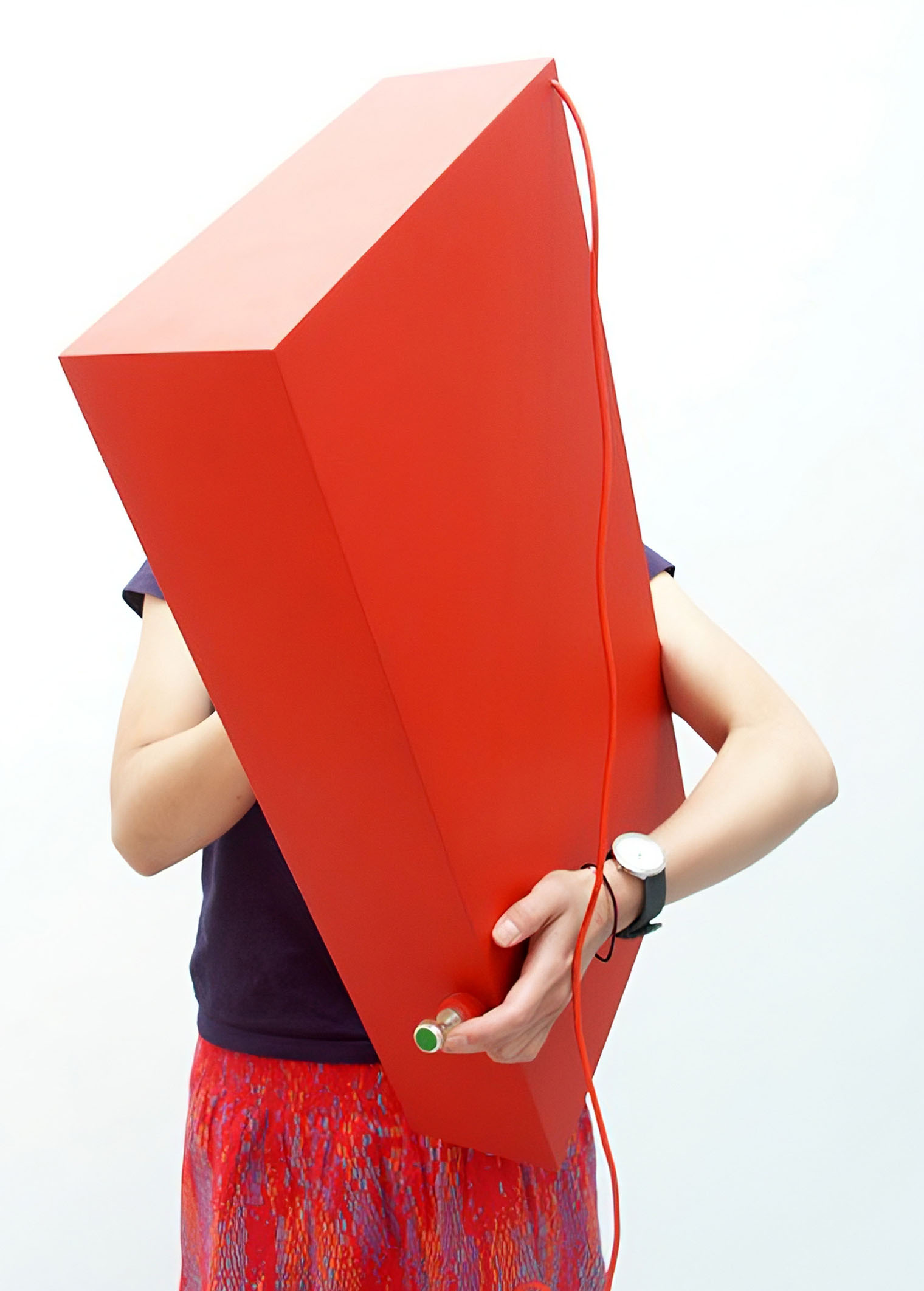
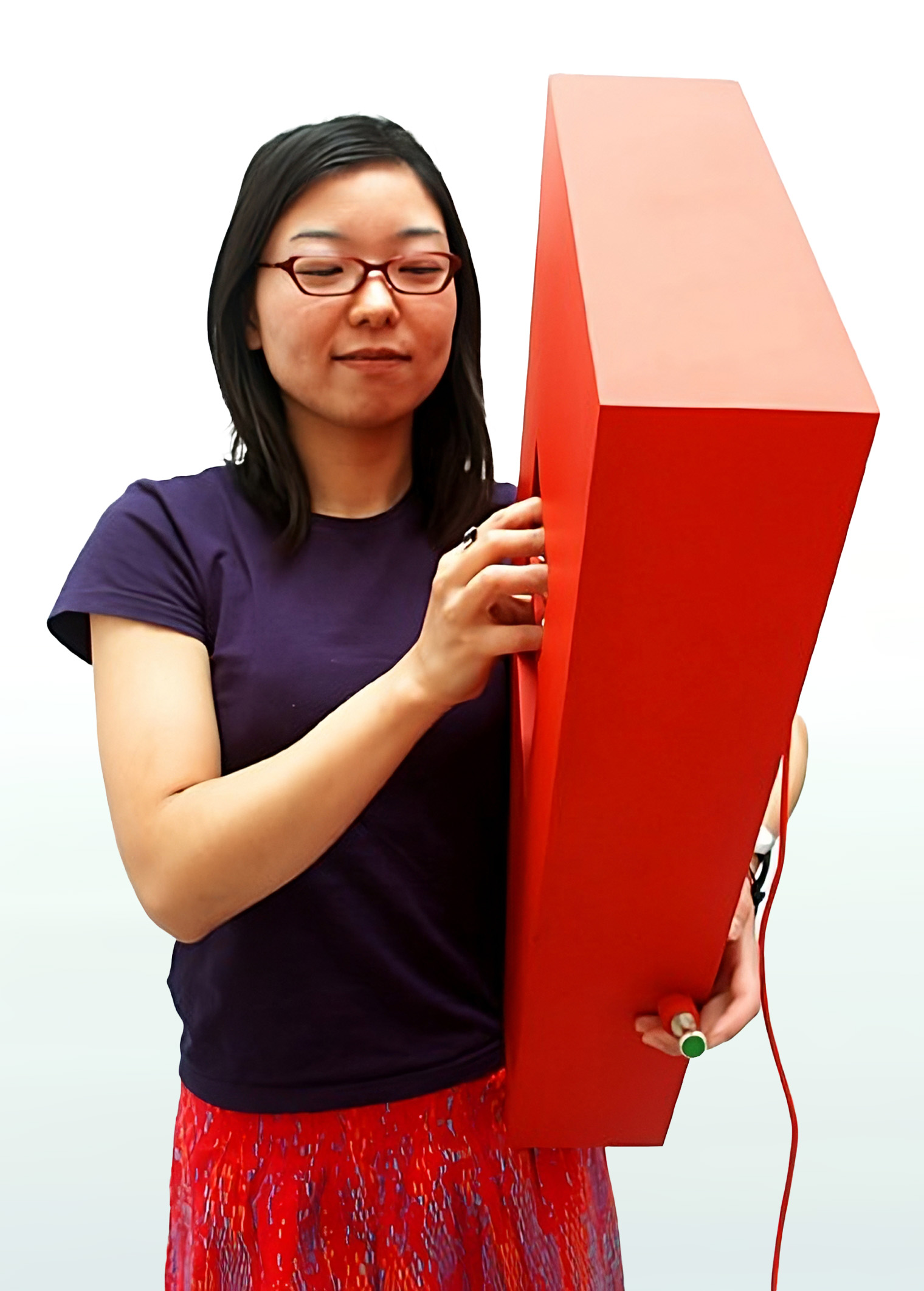
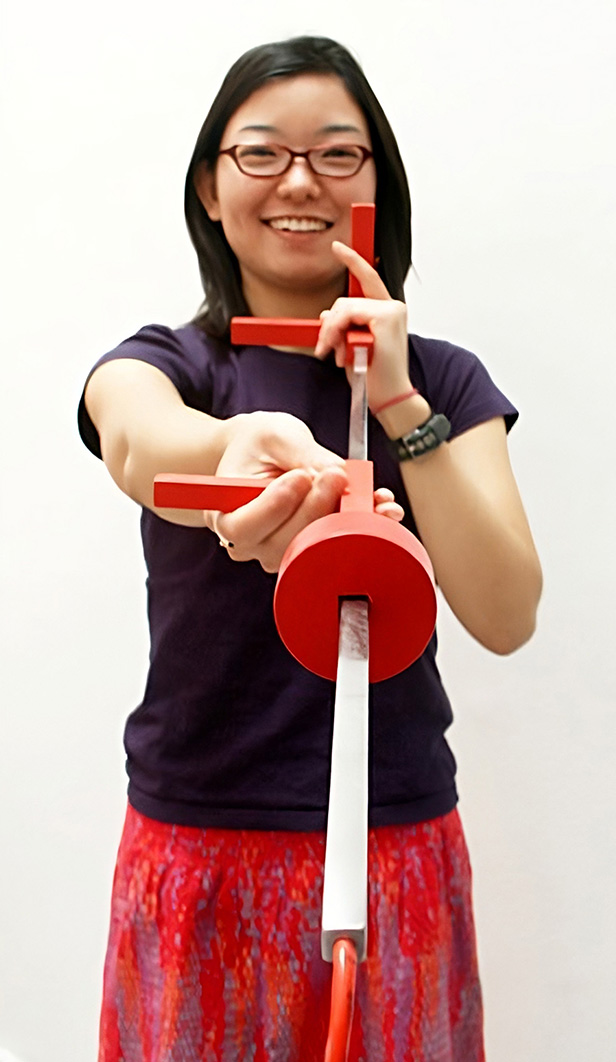
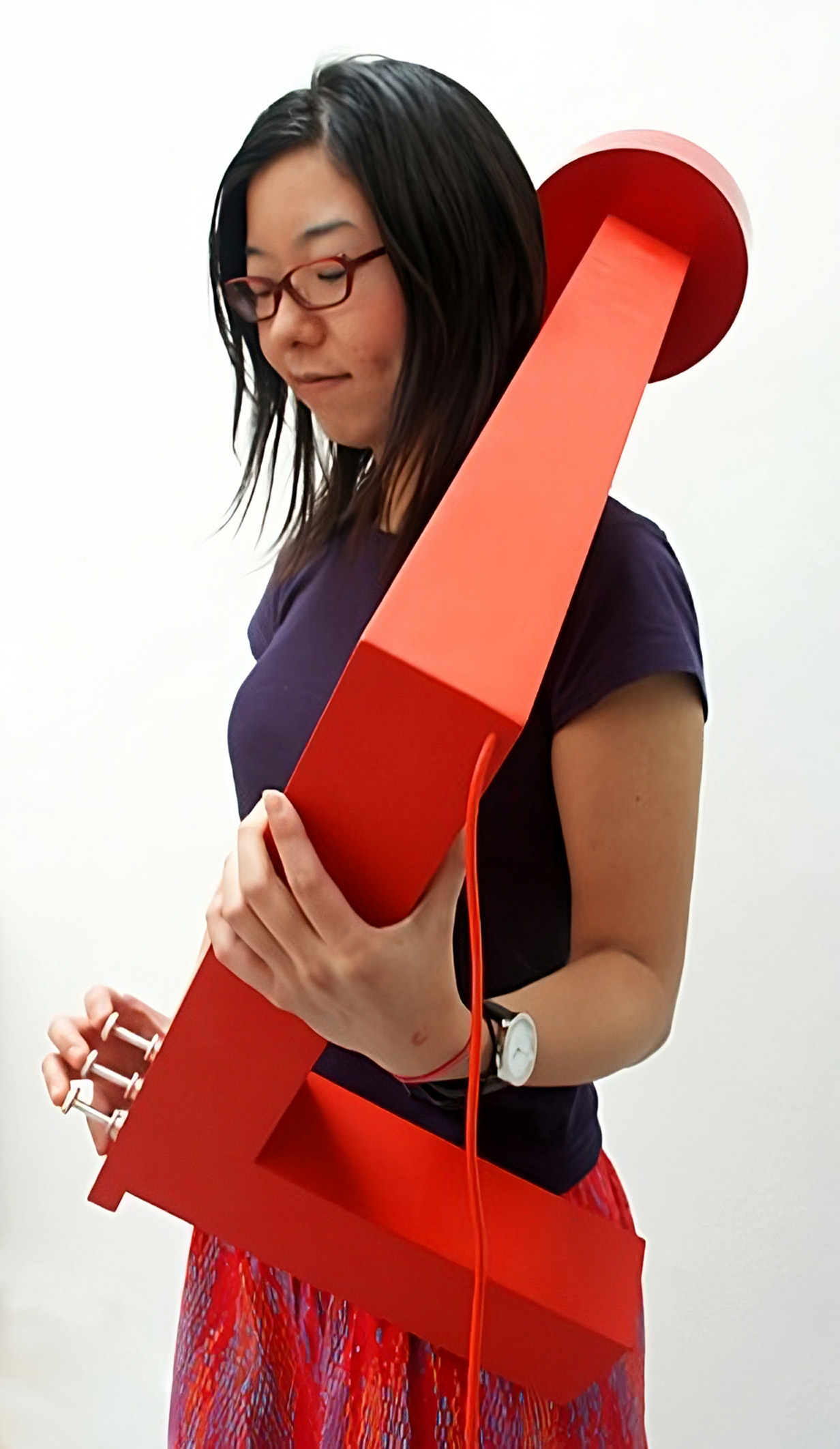
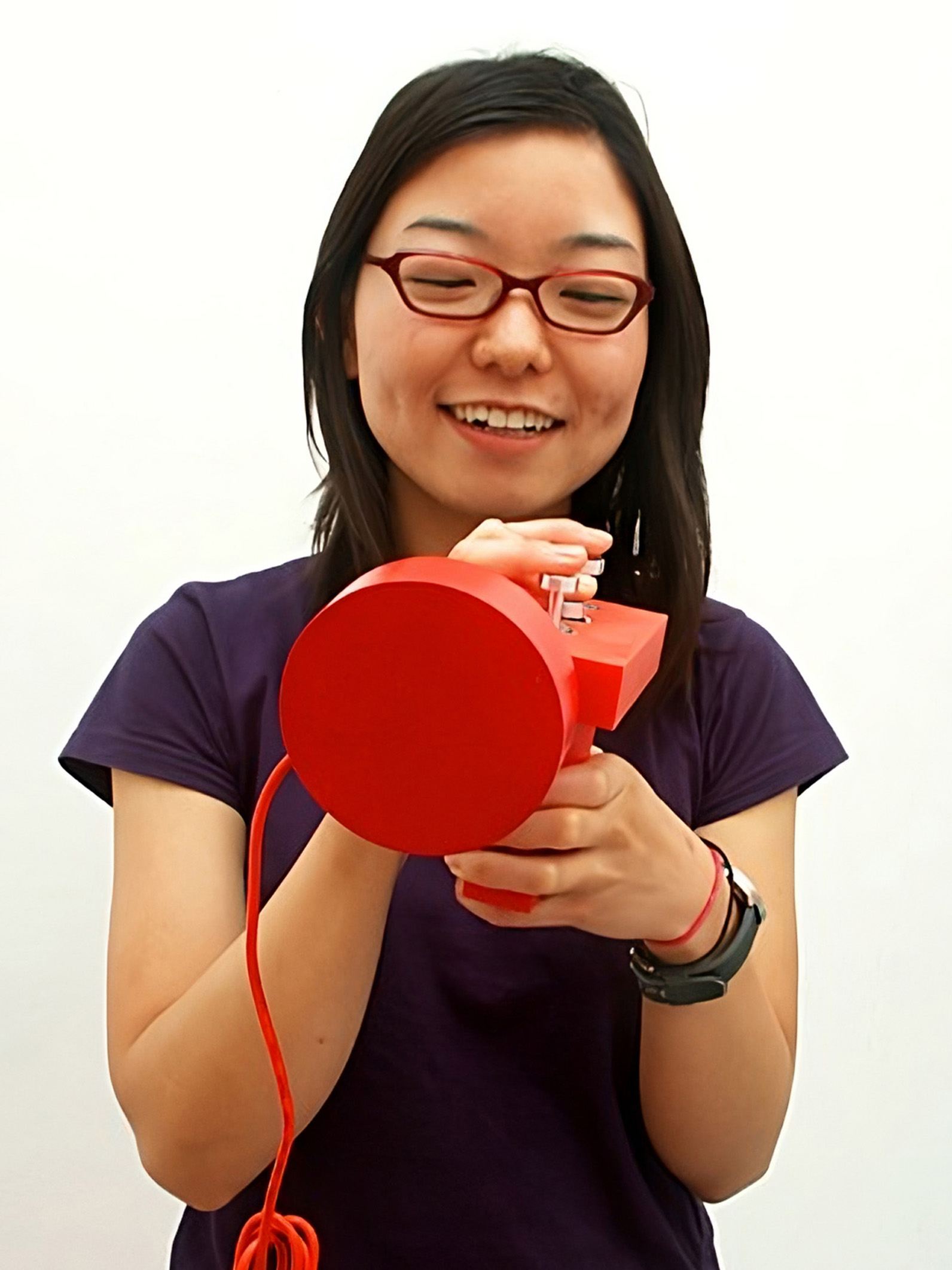
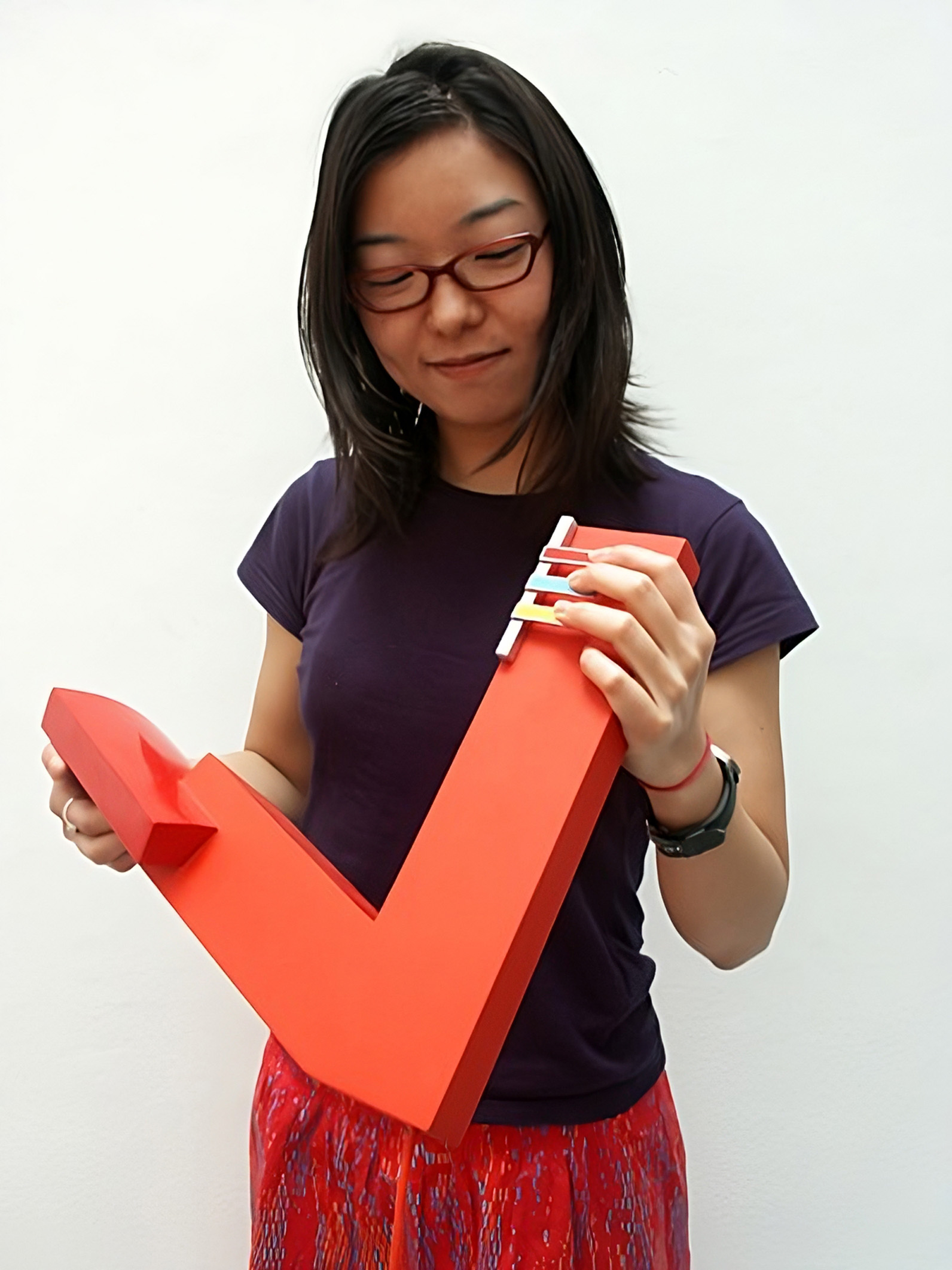
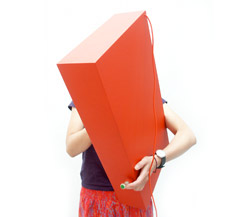
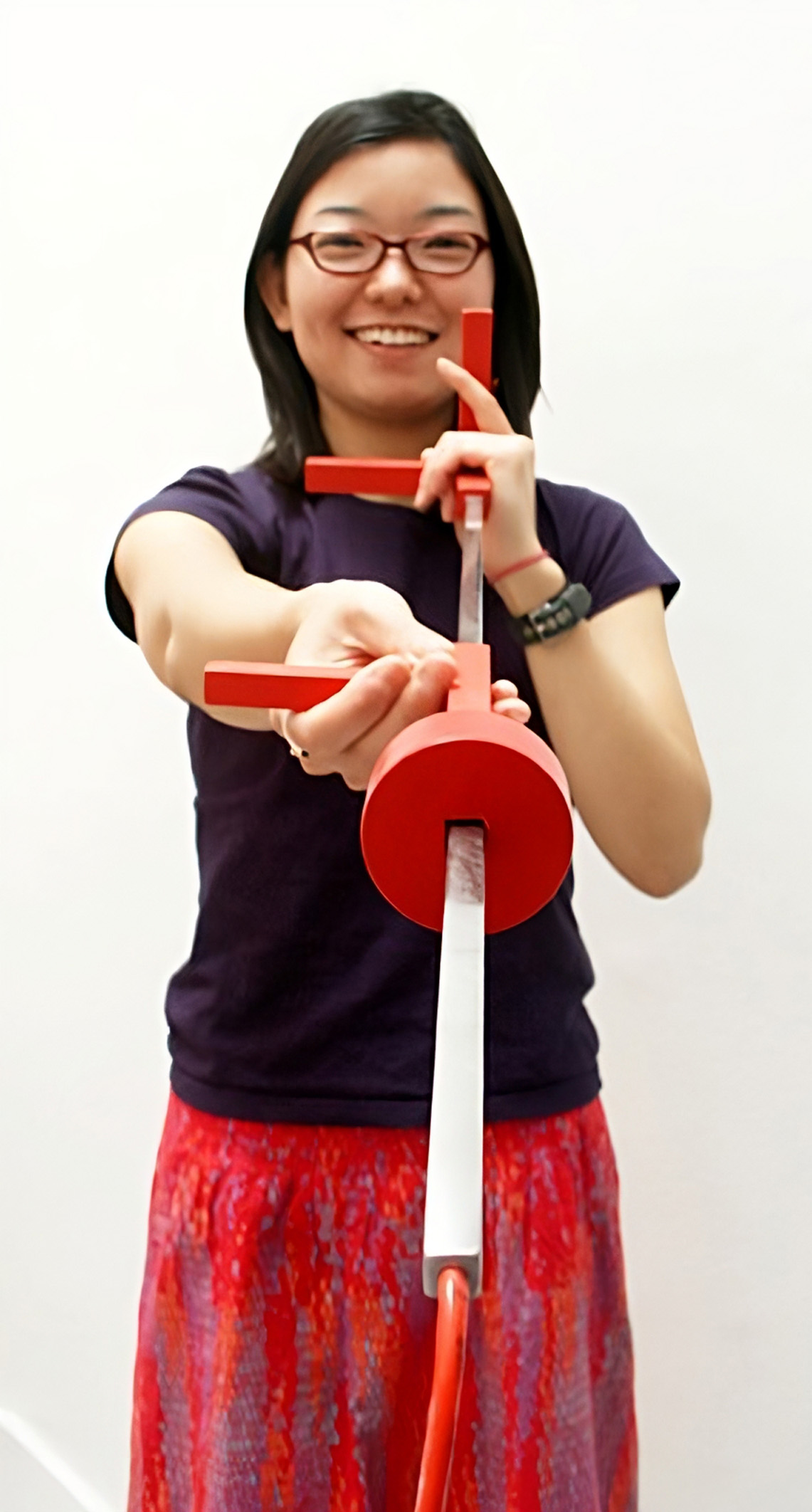
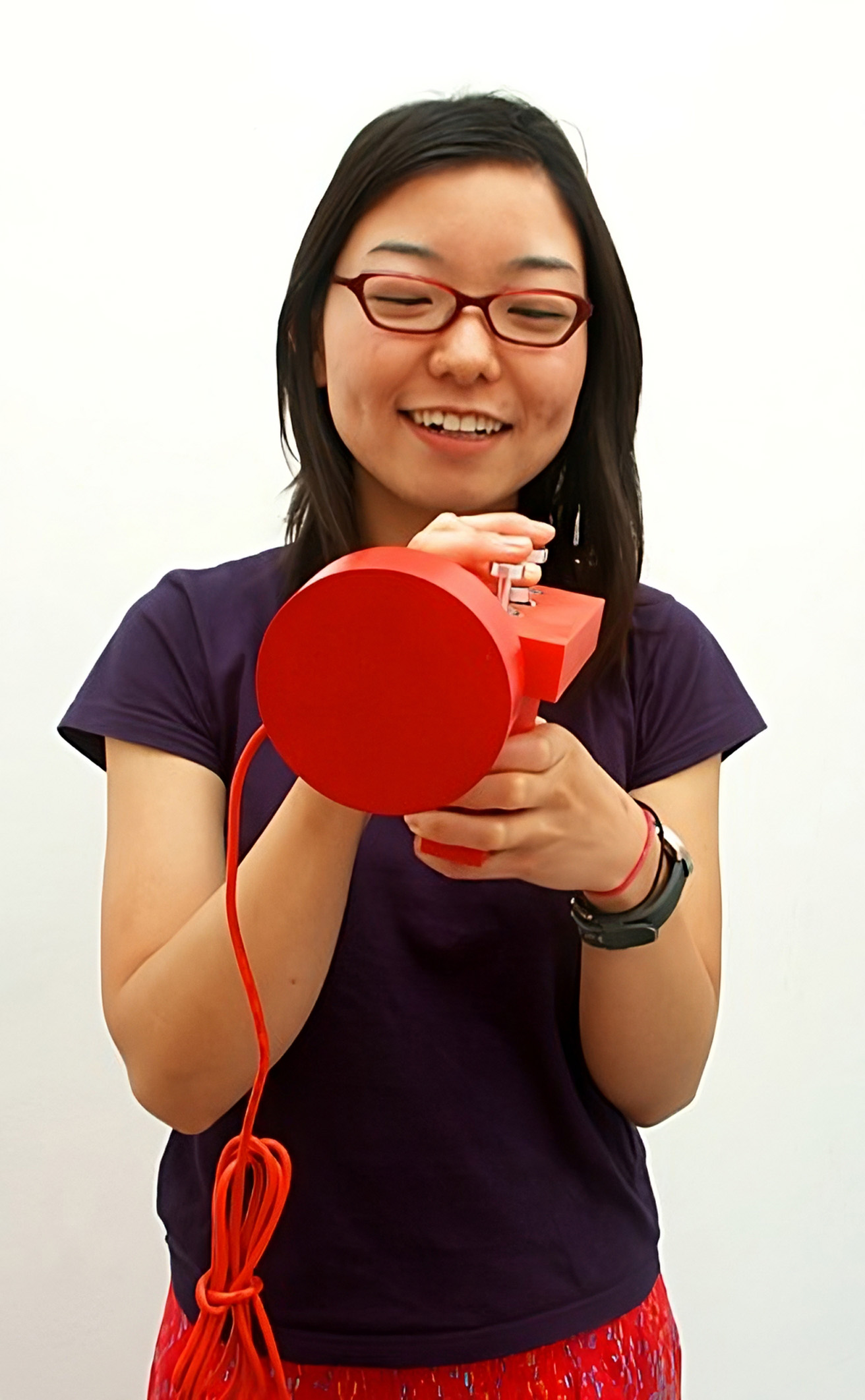
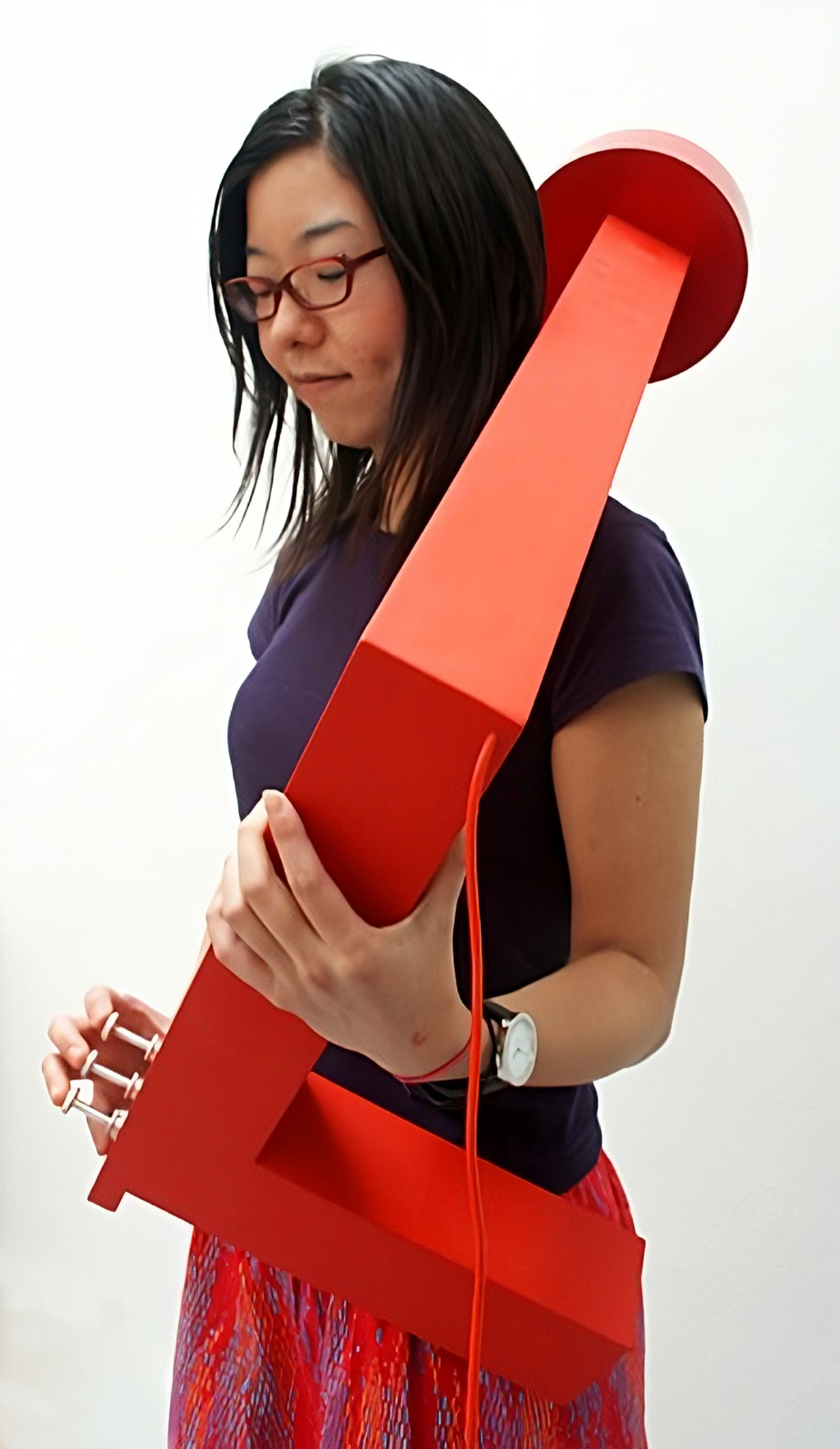
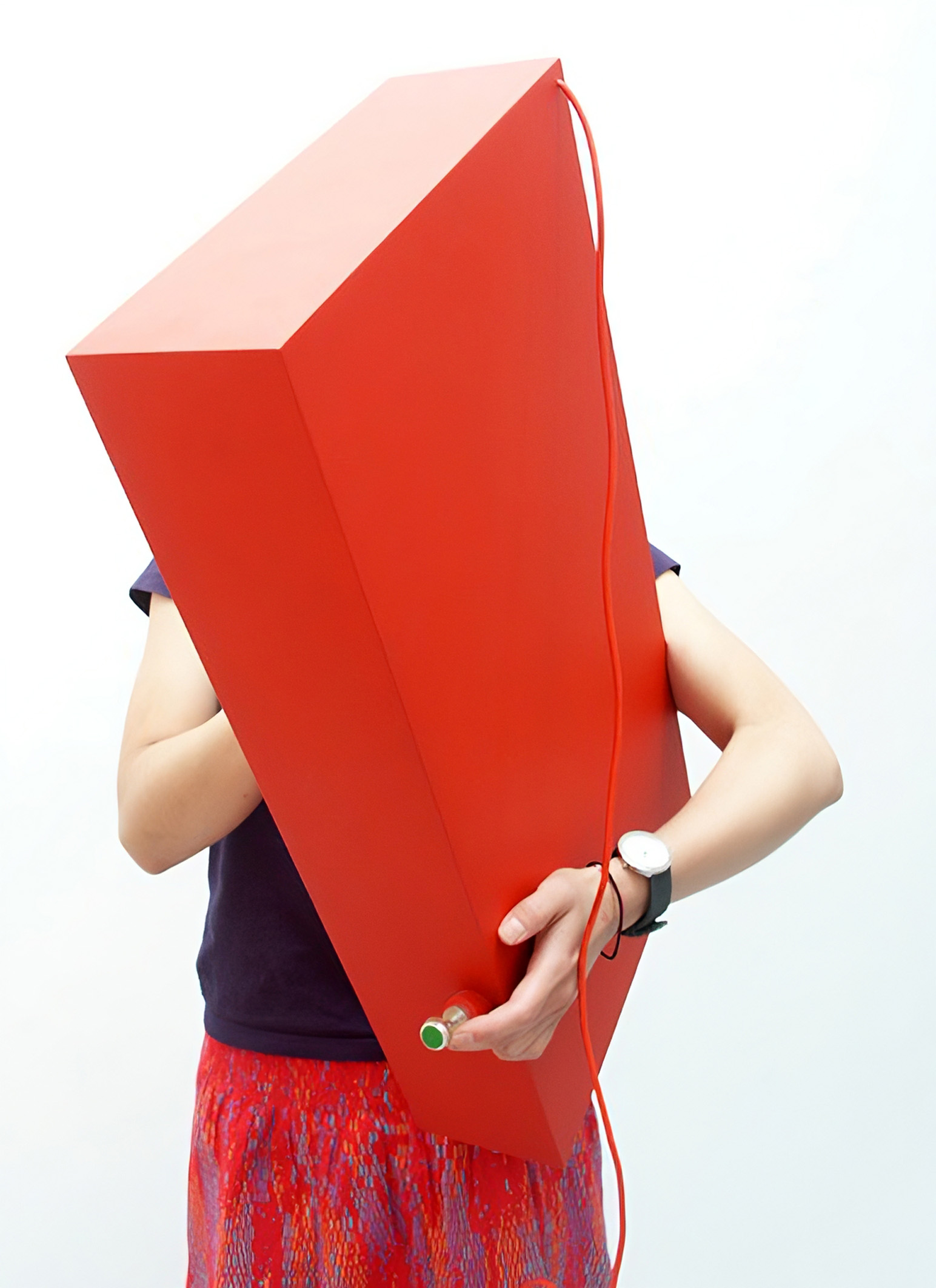
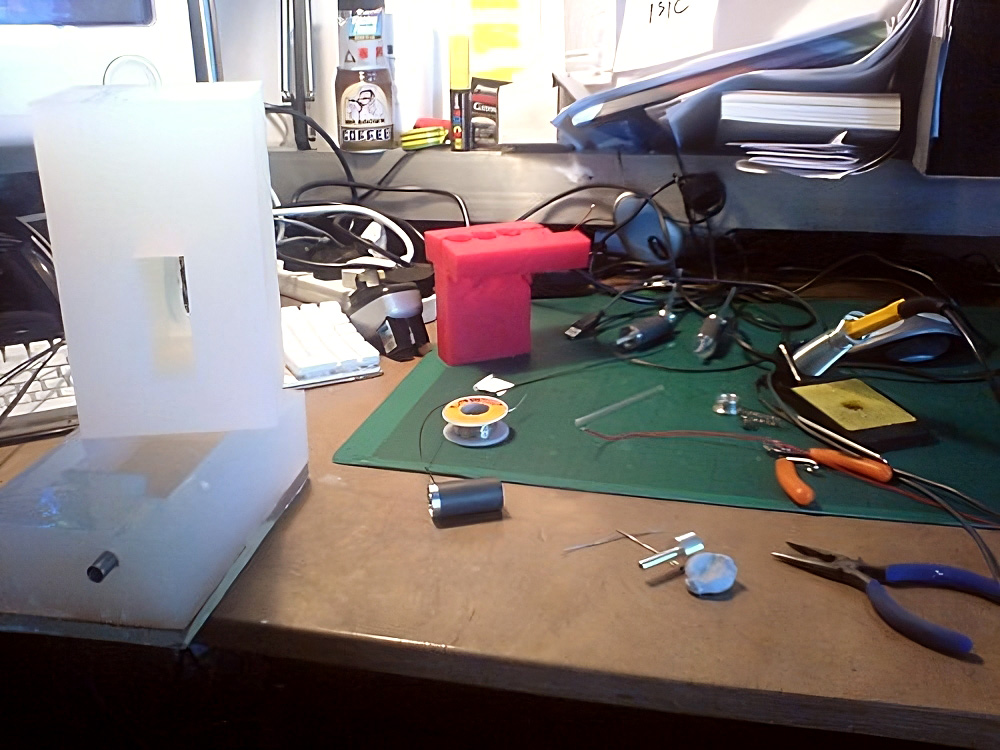
These are concept video game controllers I designed to help beginner brass players learn scale patterns. The project won first prize in the Conran Foundation Awards at the Royal College of Art show in 2006.

During my final year at the RCA, I focused on product design for learning and music, eager to challenge the implicit assumptions made in a lot of work in this area of sound toys, tools, interactive music and so on.
A lot of work in interface design for music tends to be preoccupied with designing instruments for people who may not consider themselves naturally musical. Seeing people try things out in exhibitions, galleries and so on, I find that the same thing happens again and again – non-musicians have a few minutes of fun before walking off and forgetting all about it, while musicians immediately find the limits of the instrument and complain about it. At the same time, read any press release about this type of work and it gasps breathlessly about ‘redefining the musical landscape’, or ‘reinventing how we experience music forever’. Complete nonsense.

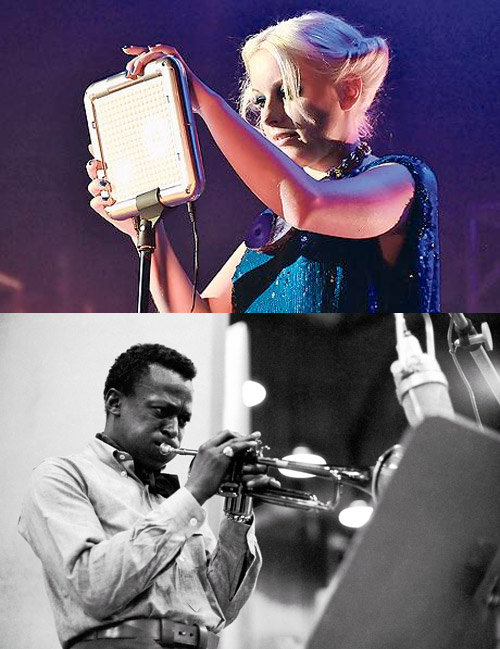
Will we ever see the Miles Davis of the Tenori-on?

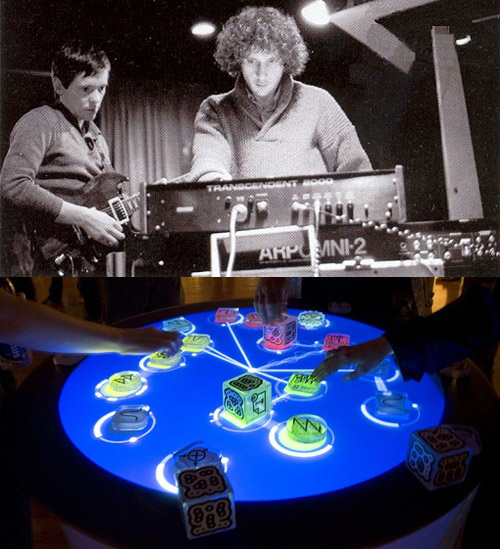
How could playing on a Reactable help the next Martin Hannett understand music beyond simple looping and basic effects?
For me, the vast majority of design thinking applied to music tends to miss the point, and at worst is just plain ignorant. I’d say most of it has very little to do with music at all. It ignores what makes making and listening to music so compelling; it devalues the process of learning the craft of music making, and it insults people who have dedicated years to doing so.
I believe a better approach starts by asking how we consider ourselves musical or not in the first place. ‘Natural talent’ or aptitude is made up of a huge amount of variables – concentration; stamina; physical dexterity; memory; listening; social interaction and so on. We all use these abilities in everyday situations, and any teacher will tell you that they can improve with daily practice. The big problem most beginner musicians face is motivation – that their practice will pay off.
Any good teacher creates a frame of reference for their pupils, helping them link what they learn to their experience of the world. As a kid, I remember playing video games far, far more than practicing scales, and I remember perceiving that these two things were pretty much completely different worlds. But maybe they aren’t. This assumption was my starting point.
Practice Makes Perfect
This work looks at the odd, everyday reality of family homes full of dusty musical instruments that frustrated, bored children give up after a few weeks, and the countless hours these same kids invest in getting to the next level or checkpoint in the latest video game.

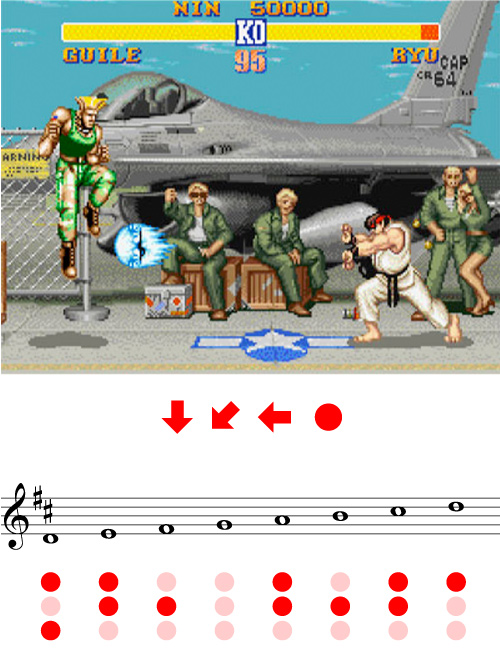
The processes involved in playing goal-based games and playing music have a lot of similarities – they celebrate performance and reward practice; they can be solo or social; they have arbitrary notation and keypress systems; involve timing and synchronisation; require the player to anticipate events and reacting beforehand; repeat and practice specific routines, and so on and so on.
The important differences are the learning curves and the return on investment. In some games it is an instantaneous reward – more points, an explosion, a power-up, a special move – and the satisfaction and enjoyment of completing a game after 40-50 hours or so. The return on investment with an instrument may take years to become apparent, but the potential for satisfaction and enjoyment is open-ended, lasting a lifetime. I’d say both activities make use of exactly the same range of abilities most of us have.
If music practice and playing video games have so many similarities, why not try to design something that communicates this?
Rehearsal Joypads - the controllers
I designed a range of controllers based on abstracted forms of real brass instruments. Initially, I just wanted to look at ergonomics, replicating the weight of the corresponding real instrument and so on. But there’s also a certain mystery in the objects that seems appropriate – the fact that the player might not know how to pick them up and use them without being ‘in the know’, or having received some musical training beforehand.

Cornet/trumpet version

French horn version

Sousaphone version

Euphonium version

Trombone version
Game design
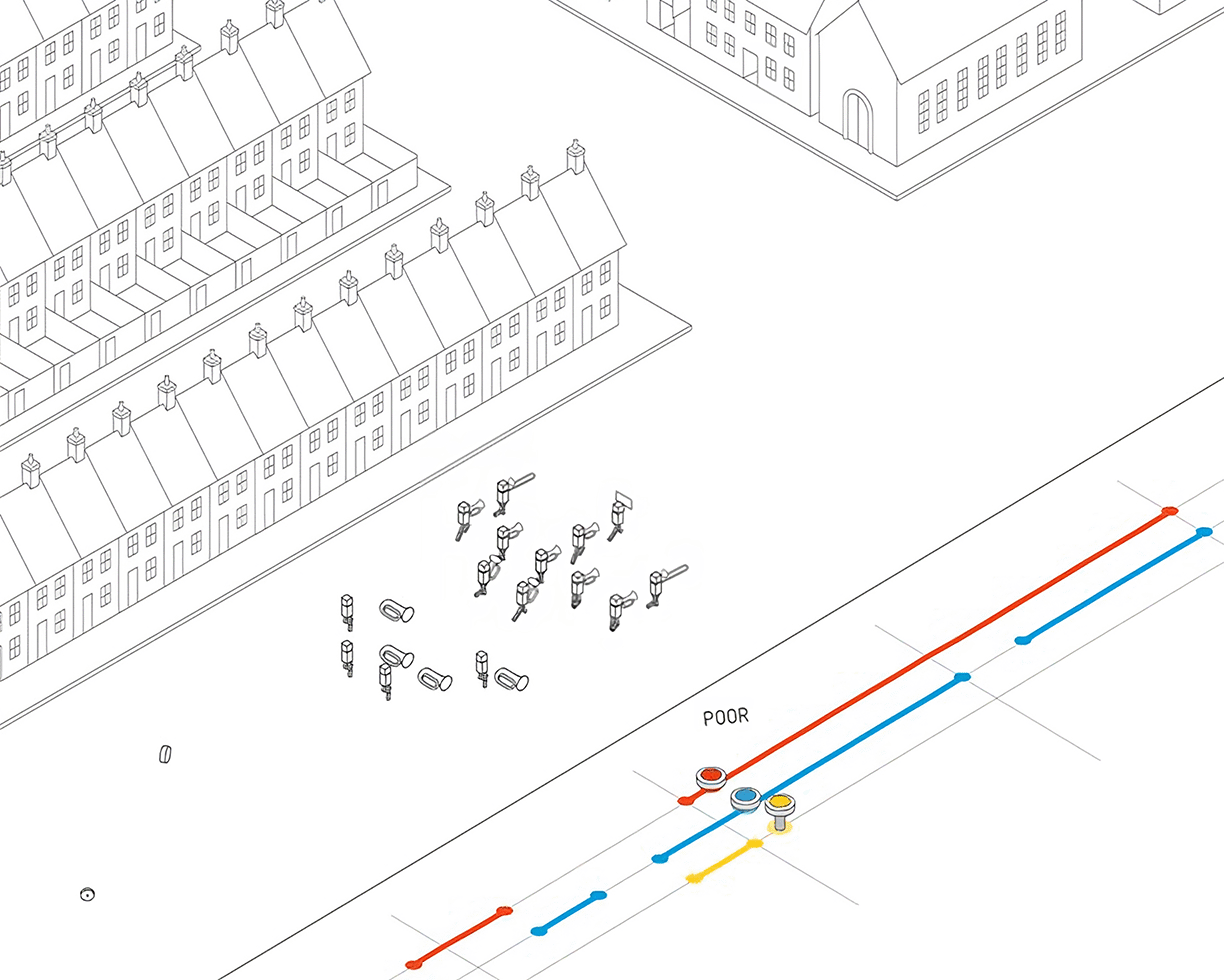
The accompanying video game uses familiar Bemani music game interface conventions – play your part correctly (as dictated by the coloured lines scrolling past), and the brass band stays in time and together; play it wrong and they drop their instruments, walking off in disgust. The difference is that keypress combinations and music are directly mapped – the idea being that by playing the game, you are also learning a fingering pattern to play the theme tune on a real instrument.
By spending a few hours playing a game that requires button presses and combos which are exactly the same as playing scales, could the player achieve enough muscle memory to use this to get better on a real instrument? If so, could this help a beginner get some basic routines ‘into the fingers’ that will help them on their way on a real instrument, and get over a few of the classic motivational hurdles all beginners face? Could a teacher use this as a way of complementing existing techniques? Could the child associate being good at the game with being good at their instrument? What if it was a multiplayer game? I also love the idea of a kid and his grandad (perhaps an old jazzer) playing against each other – the grandad completely trouncing his grandson, gaining special moves and points by playing advanced modes and scales that he spent decades perfecting.
How it was made
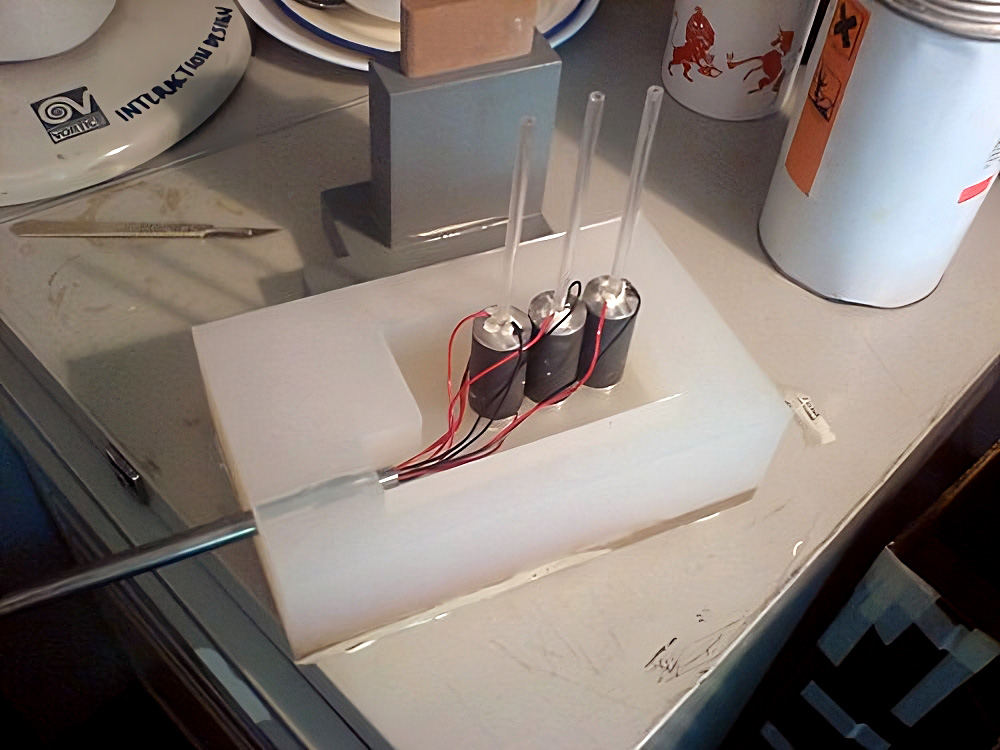
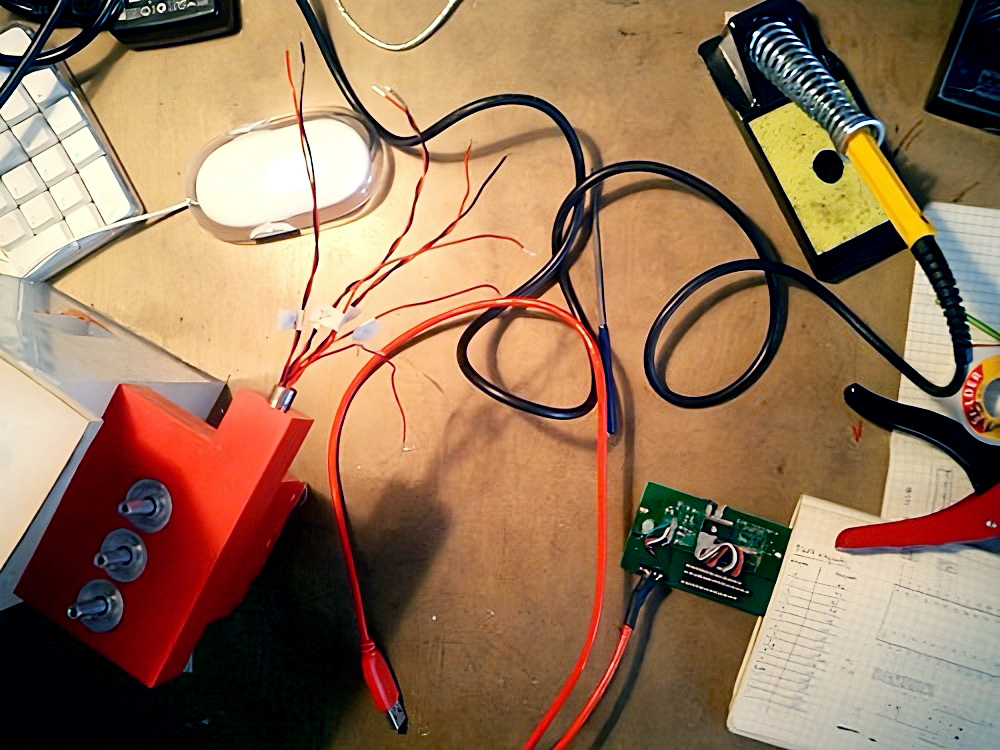
The main models were constructed by Joe Brierley at Artful Construction in Devon. I made the cornet prototype myself in the RCA workshops, with a lot of help. The main body is cast polyurethane rubber.
The valves were made from aluminium (turned on a lathe, old school style).
The electronics are simply switches (later upgraded to fancier microswitches by Hugo Elias at Shadow Robot) which generate keypresses to trigger events inside the game.
And the game itself was built in collaboration with the wonderful Henry Holland. I looked after the graphics, animation and music, and he looked after the more complex timing and event handling stuff.
The project won first prize in the Conran Foundation Awards at the Royal College of Art show in 2006.
← Back